Effectiveness of CAR-T Cell Therapies for Relapsed/Refractory Follicular Lymphoma: An External Control Arm Study
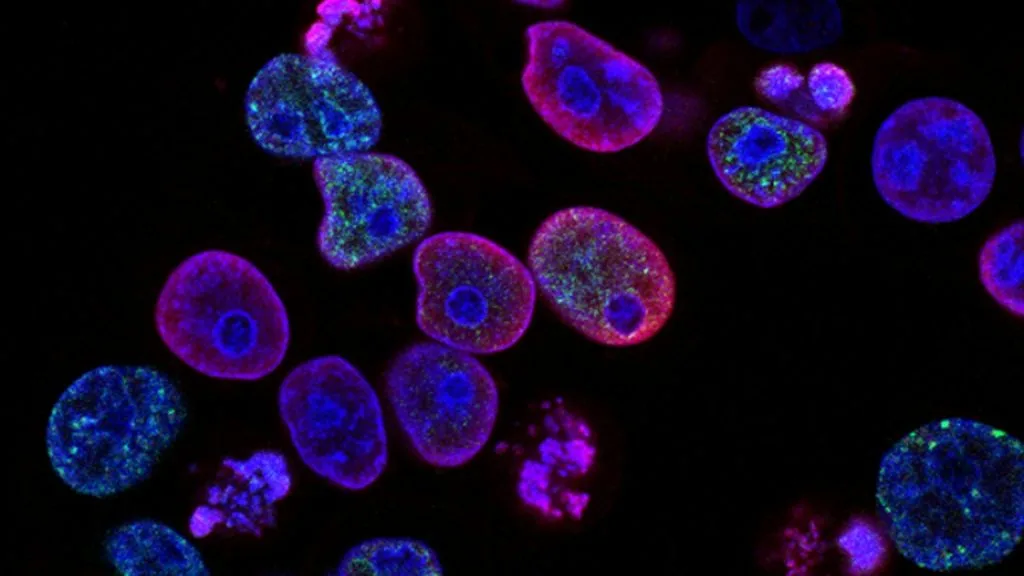
Follicular lymphoma is an indolent B-cell malignancy characterized by recurrent relapses following standard chemoimmunotherapy. This external control arm study evaluates the comparative efficacy and survival outcomes of CD19-directed chimeric antigen receptor T-cell therapies in relapsed or refractory disease cohorts.
- Primary oncogenic driver: t(14;18)(q32;q21) chromosomal translocation juxtaposing **BCL2** downstream of the immunoglobulin heavy chain enhancer.
- Salvage cellular intervention: Autologous anti-CD19 **CAR-T cell therapies** achieving durable complete response rates in chemotherapy-refractory patients.
- Comparative methodology: External control arm designs utilizing real-world databases to benchmark novel cellular immunotherapies against historical standard-of-care regimens.
Follicular lymphoma represents the second most common subtype of non-Hodgkin lymphoma, disproportionately affecting older adults with a median diagnosis age in the sixth decade. The natural history of the disease follows a relapsing and remitting clinical course with decreasing duration of response following each successive line of therapy.
Genomic pathogenesis is primarily driven by the overexpression of the anti-apoptotic **BCL2** protein via the hallmark t(14;18) translocation present in roughly eighty-five percent of cases. Secondary epigenetic mutations in **CREBBP**, **KMT2D**, and **EZH2** further promote malignant transformation and immune evasion within the germinal center microenvironment.
CLINICAL & LABORATORY DIAGNOSTIC PROTOCOL
- Specimen acquisition: Excisional lymph node biopsy or core needle biopsy fixed in 10% neutral-buffered formalin (NBF) within 30 minutes of surgical extraction.
- Tissue processing: Fixation duration strictly monitored between 24 and 48 hours at room temperature, followed by paraffin embedding and microtome sectioning at 4-micron thickness.
- Control standards: Internal positive control utilizing benign tonsillar germinal center architecture and validated negative isotype control antibodies run simultaneously.
Deparaffinization & Heat-Induced Epitope Retrieval (HIER)
Bake slides at 60°C for 60 minutes, pass through three changes of xylene for 5 minutes each, and rehydrate through descending ethanol gradients to distilled water. Perform HIER in pH 9.0 Tris-EDTA buffer using a pressure cooker at 121°C for 15 minutes.
Peroxidase Block & Primary Antibody Incubation
Block endogenous peroxidase activity with 3% aqueous hydrogen peroxide for 10 minutes at room temperature. Apply primary monoclonal antibodies targeting **CD20** (clone L26), **CD10** (clone 56C6), and **BCL2** (clone 124) at pre-titrated optimal dilutions.
Polymer Detection & Chromogen Reaction
Wash slides thoroughly in Tris-buffered saline with 0.05% Tween-20 (TBST). Apply horseradish peroxidase-conjugated anti-rabbit/mouse secondary polymer and incubate for 30 minutes, followed by exposure to 3,3-diaminobenzidine (DAB) chromogen substrate for 5 minutes.
Nuclear Counterstain & Permanent Coverslipping
Apply Mayer hematoxylin nuclear counterstain for 1 minute, rinse in warm tap water for bluing, dehydrate through ascending ethanols, clear in xylene, and apply resinous mounting medium. Evaluate expression patterns across neoplastic follicles compared to interfollicular zones.
1. Pathophysiology, Etiology & Cellular Carcinogenesis
Follicular lymphoma originates from centrocytes and centroblasts residing within the germinal centers of secondary lymphoid organs. The defining genetic lesion is the t(14;18) translocation, which places **BCL2** under the transcriptional control of the immunoglobulin heavy chain promoter.
Overexpression of the **BCL2** protein blocks normal apoptotic pathways, leading to the accumulation of malignant B cells within lymph node follicles. Additional cooperative mutations in **EZH2** and **TNFRSF14** disrupt epigenetic regulation and normal cellular differentiation checkpoints.
The tumor microenvironment plays a critical survival role, composed of exhausted T cells, follicular dendritic cells, and macrophages that secrete supportive cytokines. This immunosuppressive stroma blunts endogenous anti-tumor immune responses and contributes to chemoresistance.
2. Oncogenic Signal Transduction Pathways & Genomic Alterations
Malignant B-cell proliferation is sustained by chronic active B-cell receptor signaling and aberrant cytokine receptor activation. Downstream signaling axes, including the **PI3K-AKT-mTOR** and **JAK-STAT** pathways, are constitutively upregulated to promote cell survival and protein synthesis.
Loss-of-function mutations in histone methyltransferases such as **KMT2D** and acetyltransferases like **CREBBP** result in widespread chromatin condensation and transcriptional silencing of tumor suppressor genes. These epigenetic aberrations drive disease progression and histologic transformation into diffuse large B-cell lymphoma.
Genomic instability frequently leads to secondary deletions on chromosomes 1p, 6q, and 10q, disrupting DNA damage repair mechanisms. Bypass signaling networks emerge under therapeutic selective pressure, rendering standard anti-CD20 monoclonal antibody therapy ineffective.
3. Histopathological Grading, Morphological Subtypes & Differential Diagnosis
Histological evaluation relies on the quantification of centroblasts per high-power field within neoplastic follicles. Grading ranges from Grade 1-2 (0-15 centroblasts) to Grade 3A (greater than 15 centroblasts with centrocytes present) and Grade 3B (solid sheets of centroblasts).
Diagnostic immunohistochemistry demonstrates diffuse positivity for pan-B-cell markers **CD19**, **CD20**, and **CD22**, alongside germinal center markers **CD10** and **BCL6**. Aberrant co-expression of **BCL2** distinguishes neoplastic follicles from reactive follicular hyperplasia.
Differential diagnosis requires exclusion of reactive follicular hyperplasia, mantle cell lymphoma via **CCND1** fluorescence in situ hybridization, and marginal zone lymphoma. Morphologic transformation to aggressive lymphoma necessitates biopsy confirmation of high-grade architectural effacement.
4. Targeted Therapeutics, Landmark Phase III Trials & Resistance Mechanics
Frontline management typically involves observation for asymptomatic patients or chemoimmunotherapy combining **rituximab** with bendamustine or CHOP. For relapsed or refractory disease, cellular immunotherapy utilizing autologous anti-CD19 **CAR-T cell therapies** has revolutionized salvage paradigms.
Landmark clinical investigations such as the ZUMA-5 trial evaluating **axicabtagene ciloleucel** and the ELIANA/JULIET paradigms demonstrated unprecedented objective response rates and durable remissions in heavily pre-treated indolent lymphomas. Progression-free survival curves show sustained plateau phases compared to historical salvage chemotherapy.
Mechanisms of resistance to cellular therapy include antigen escape via downregulation of surface **CD19**, defective CAR-T cell persistence, and immunosuppressive checkpoint receptor upregulation such as **PD-1** and **TIM-3**. Combination strategies incorporating lenalidomide or bispecific antibodies are actively investigated to overcome refractory phenotypes.
5. Molecular Staging, Minimal Residual Disease (ctDNA) & Prognostic Stratification
Staging incorporates the **Ann Arbor classification** alongside the Follicular Lymphoma International Prognostic Index (FLIPI), which integrates clinical parameters including age, stage, hemoglobin, and lactate dehydrogenase. Molecular risk models incorporate mutational status of genes such as **EZH2** and **TP53** to refine risk stratification.
Liquid biopsy surveillance using circulating tumor **DNA (ctDNA)** quantification allows for sensitive detection of minimal residual disease prior to clinical relapse. Monitoring mutant **BCL2** molecules in peripheral blood plasma correlates directly with treatment response and impending progression.
Integration of external control arms in clinical research provides robust comparative data when randomized controlled trials are unfeasible due to ethical or recruitment constraints. This methodological approach establishes valid benchmarks for evaluating novel immunotherapeutic interventions in rare relapsed settings.