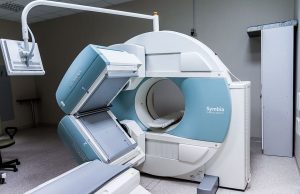
====== PET scans ======
PET Scans: A Powerful Tool in Monitoring Cancer Treatment
Cancer is a complex disease that requires a multifaceted approach to treatment. One important aspect of cancer care is monitoring the effectiveness of treatment. PET scans, or positron emission tomography scans, are a valuable tool in this regard. They provide detailed images of the body’s metabolic activity, which can help doctors assess how well a treatment is working and make necessary adjustments.
How PET Scans Work
PET scans involve injecting a small amount of a radioactive tracer into the body. This tracer is absorbed by cells and tissues and emits positrons, which then interact with electrons to produce gamma rays. These gamma rays are detected by a scanner and used to create images of the body.
The level of metabolic activity in different tissues can be determined by measuring the amount of tracer uptake. For example, cancerous cells typically have a higher metabolic rate than normal cells, so they will appear brighter on a PET scan. This information can help doctors identify and track the spread of cancer.
Benefits of PET Scans in Monitoring Cancer Treatment
PET scans offer several benefits for monitoring cancer treatment:
- Early detection of treatment response: PET scans can detect changes in tumor size and metabolic activity even before they are visible on other imaging tests. This allows doctors to make early adjustments to treatment if it is not working as expected.
- Assessment of treatment effectiveness: PET scans can help doctors assess the effectiveness of different treatments by monitoring changes in tumor size and metabolic activity over time. This information can help guide treatment decisions and improve patient outcomes.
- Identification of recurrent cancer: PET scans can help identify recurrent cancer after treatment. This allows doctors to take appropriate action to address the recurrence and improve the chances of a successful outcome.
PET Scans and Cancer Diagnosis
In addition to monitoring cancer treatment, PET scans are also used in diagnosing cancer. They can help identify the location and extent of tumors, which is essential for planning treatment. PET scans can also be used to differentiate between benign and malignant tumors, which can help guide treatment decisions.
Conclusion
PET scans are a powerful tool in both diagnosing and monitoring cancer treatment. They provide valuable information about the metabolic activity of tissues, which can help doctors assess treatment effectiveness and make necessary adjustments. PET scans are a safe and non-invasive procedure that can significantly improve the outcomes of cancer patients.
Secondary Keywords:
- Cancer treatment monitoring
- PET scan interpretation
- Cancer diagnosis
- Imaging in cancer care
- Metabolic activity imaging