Cancerous.eu – What is Bladder Cancer? Bladder cancer is a type of cancer that begins in the cells of the bladder, which is a muscular sac in the pelvis that stores urine. The most common type of bladder cancer is urothelial carcinoma, also known as transitional cell carcinoma, which begins in the cells that line the inside of the bladder.
The exact cause of bladder cancer is unknown, but several risk factors have been identified, including:
- Smoking: Cigarette smokers are at a higher risk of developing bladder cancer than non-smokers.
- Exposure to chemicals: Certain chemicals, such as those used in the dye industry, may increase the risk of bladder cancer.
- Age: The risk of bladder cancer increases with age.
- Gender: Men are more likely to develop bladder cancer than women.
- Chronic bladder inflammation: People who have had long-term bladder problems, such as frequent infections or bladder stones, may have an increased risk of bladder cancer.
Symptoms of bladder cancer may include:
- Blood in the urine
- Painful urination
- Frequent urination
- Urgency to urinate
- Lower back pain
- Pelvic pain
Treatment for bladder cancer depends on the stage and type of cancer, but may include surgery, chemotherapy, radiation therapy, or a combination of these treatments. People with bladder cancer may also need ongoing monitoring to check for recurrence or the development of new tumors.
Kinds of Bladder Cancer
There are several types of bladder cancer, but the most common is urothelial carcinoma, which accounts for about 90% of all cases. Other less common types of bladder cancer include:
- Squamous cell carcinoma: This type of bladder cancer begins in the thin, flat cells that line the bladder. It accounts for about 4% of all bladder cancers and is more common in certain parts of the world, such as Africa and the Middle East.
- Adenocarcinoma: This type of bladder cancer begins in the cells that make up the glandular tissue in the bladder. It accounts for about 1% of all bladder cancers.
- Small cell carcinoma: This is a rare and aggressive type of bladder cancer that begins in the nerve-like cells in the bladder. It accounts for less than 1% of all bladder cancers.
- Sarcoma: This is a rare type of bladder cancer that begins in the connective tissue cells in the bladder. It accounts for less than 1% of all bladder cancers.
- Lymphoma: This is a rare type of bladder cancer that begins in the cells of the immune system in the bladder. It accounts for less than 1% of all bladder cancers.
The treatment for bladder cancer depends on the type and stage of cancer, as well as the patient’s overall health and preferences.
Stage of Bladder Cancer
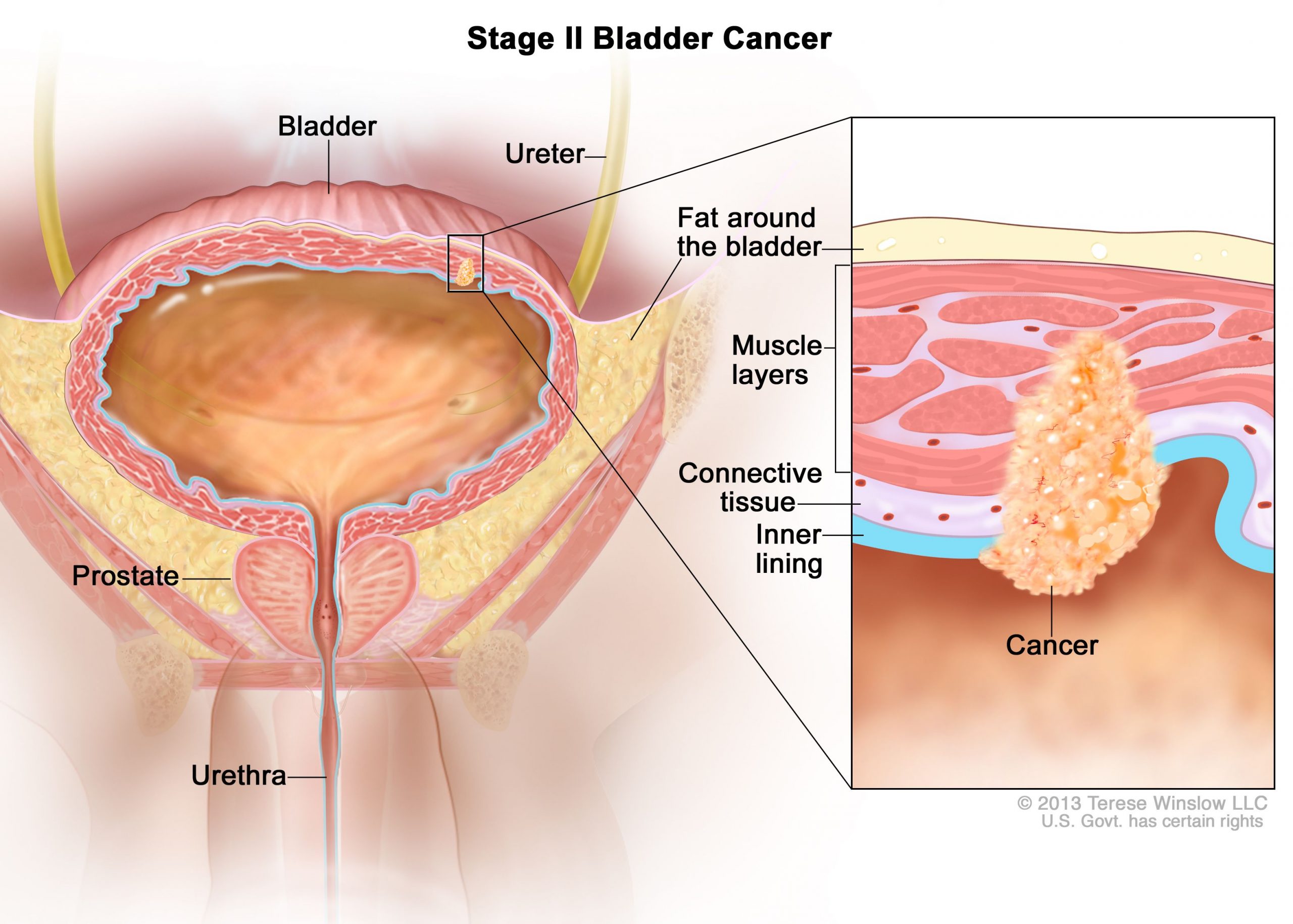
Bladder cancer staging is a way to describe the extent and spread of cancer. The stage of bladder cancer is determined based on the size and location of the tumor, whether it has invaded nearby tissues or organs, and whether it has spread to lymph nodes or other parts of the body.
The stages of bladder cancer may include:
- Stage 0: This stage is also known as carcinoma in situ and refers to cancer cells that are only in the inner lining of the bladder.
- Stage I: Cancer has grown into the connective tissue layer beneath the inner lining of the bladder.
- Stage II: Cancer has invaded the muscle layer of the bladder.
- Stage III: Cancer has spread beyond the bladder to nearby tissues such as the prostate gland, uterus, or vagina.
- Stage IV: Cancer has spread to lymph nodes or other distant parts of the body, such as the bones, lungs, or liver.
The stage of bladder cancer is an important factor in determining the best treatment options and predicting the outlook for the individual. The earlier the stage, the more likely the cancer is to be successfully treated. It is important to discuss the stage of bladder cancer with a healthcare provider to determine the most appropriate treatment plan.
What Are the Symptoms of Bladder Cancer?
The symptoms of bladder cancer may vary from person to person, and some people may not experience any symptoms at all, especially in the early stages of the disease. However, some common symptoms of bladder cancer may include:
- Blood in the urine (hematuria): This is the most common symptom of bladder cancer. The urine may be pink, red, or dark brown in color.
- Painful urination: You may experience a burning or painful sensation when you urinate.
- Frequent urination: You may need to urinate more often than usual, even if you don’t have much urine in your bladder.
- Urgency to urinate: You may feel a sudden urge to urinate, even if you have just emptied your bladder.
- Lower back pain: Bladder cancer can sometimes cause pain in the lower back or pelvic area.
- Pelvic pain: You may experience pain or discomfort in the pelvis or lower abdomen.
If you experience any of these symptoms, it is important to see a doctor for an evaluation. These symptoms can also be caused by other conditions, such as a urinary tract infection or kidney stones, but it is important to rule out bladder cancer as a possible cause.
What Are the Risk Factors for Bladder Cancer?
There are several known risk factors for bladder cancer, including:
- Smoking: Smoking is the most significant risk factor for bladder cancer. Smokers are at least three times more likely to develop bladder cancer than non-smokers.
- Age: The risk of bladder cancer increases with age, with most cases occurring in people over the age of 55.
- Gender: Men are more likely to develop bladder cancer than women, with a ratio of about 3 to 1.
- Exposure to chemicals: Exposure to certain chemicals, such as those used in the dye industry, can increase the risk of bladder cancer.
- Chronic bladder inflammation: People who have had long-term bladder problems, such as recurrent infections or bladder stones, may be at higher risk of developing bladder cancer.
- Genetics: Bladder cancer can sometimes run in families, so people with a family history of bladder cancer may be at increased risk.
- Radiation therapy: People who have received radiation therapy for other types of cancer, such as prostate or cervical cancer, may be at increased risk of developing bladder cancer.
- Certain medications: Some medications, such as cyclophosphamide (used to treat certain cancers and autoimmune disorders), can increase the risk of bladder cancer.
It is important to note that having one or more risk factors does not necessarily mean that a person will develop bladder cancer, and some people without any known risk factors may still develop the disease.
What Can I Do to Reduce My Risk of Bladder Cancer?
There are several steps you can take to reduce your risk of bladder cancer:
- Quit smoking: If you smoke, quitting is the most important step you can take to reduce your risk of bladder cancer. Talk to your healthcare provider about ways to quit smoking, including nicotine replacement therapy and medication.
- Avoid exposure to chemicals: If you work in an industry that involves exposure to chemicals, take steps to minimize your exposure by wearing protective clothing and following safety guidelines.
- Stay hydrated: Drinking plenty of fluids, especially water, can help reduce your risk of bladder cancer by diluting the concentration of any potentially harmful substances in your urine.
- Practice good bladder hygiene: Urinate regularly and completely to reduce the risk of infection, and avoid holding your urine for long periods of time.
- Eat a healthy diet: A healthy diet rich in fruits and vegetables may help reduce your risk of bladder cancer.
- Exercise regularly: Regular physical activity can help reduce your risk of many types of cancer, including bladder cancer.
- Follow up with your healthcare provider: If you have a history of bladder problems, such as recurrent infections or bladder stones, or if you have a family history of bladder cancer, talk to your healthcare provider about ways to reduce your risk and the need for regular monitoring.
By taking these steps, you can help reduce your risk of bladder cancer and promote overall health and wellness.
How Is Bladder Cancer Diagnosed?
Bladder cancer may be diagnosed using various tests and procedures, which may include:
- Physical exam: A doctor may perform a physical exam to check for any lumps or swelling in the abdomen or pelvis.
- Urine tests: A urine sample may be collected and tested for the presence of blood or abnormal cells.
- Imaging tests: Imaging tests such as ultrasound, CT scan, MRI, or X-ray may be used to examine the bladder and surrounding organs.
- Cystoscopy: A cystoscopy involves inserting a thin, lighted tube with a camera into the bladder to examine the inside of the bladder.
- Biopsy: If abnormal cells are found during a cystoscopy or other tests, a biopsy may be performed to remove a small sample of tissue for further testing.
- Staging tests: If bladder cancer is diagnosed, additional tests may be done to determine the stage of the cancer and whether it has spread to other parts of the body. These may include imaging tests, such as CT scan, MRI, or PET scan, or other tests such as bone scan or blood tests.
The tests and procedures used to diagnose bladder cancer may vary depending on the individual case and the severity of the cancer. If you are experiencing symptoms of bladder cancer, it is important to see a doctor for an evaluation and diagnosis.
How Is Bladder Cancer Treated?
The treatment of bladder cancer may depend on several factors, including the stage and grade of the cancer, the patient’s overall health, and other individual factors. The main treatment options for bladder cancer may include:
- Surgery: Surgery is often the main treatment for early-stage bladder cancer. The type of surgery may depend on the location and extent of the cancer and may involve removing the tumor only, removing part of the bladder, or removing the entire bladder (cystectomy).
- Chemotherapy: Chemotherapy uses drugs to kill cancer cells and may be used to treat bladder cancer that has spread to other parts of the body or that is high-grade. Chemotherapy may be given intravenously or directly into the bladder.
- Immunotherapy: Immunotherapy uses drugs to stimulate the immune system to attack cancer cells. This treatment may be used to treat advanced bladder cancer or to prevent the recurrence of bladder cancer after surgery.
- Radiation therapy: Radiation therapy uses high-energy rays to kill cancer cells and may be used in combination with chemotherapy to treat bladder cancer that has spread to other parts of the body or to relieve symptoms of advanced bladder cancer.
- Clinical trials: Clinical trials may be available for people with bladder cancer, offering access to new and innovative treatments.
The treatment of bladder cancer may involve a combination of these treatments, and the treatment plan will depend on the individual case. It is important to discuss all treatment options with a healthcare provider to determine the best approach for your specific case.