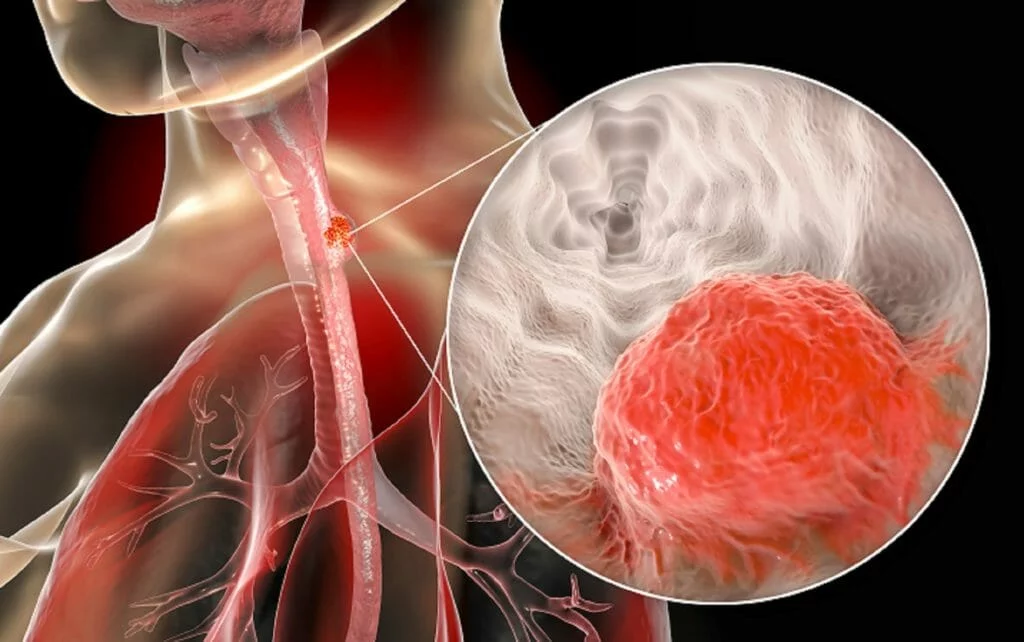
Cancerous.eu – What is Esophageal Cancer? Esophageal cancer is a type of cancer that develops in the lining of the esophagus, which is a muscular tube that connects the throat to the stomach. Esophageal cancer usually begins in the cells that line the inside of the esophagus and can spread to other parts of the body if not treated.
There are two main types of esophageal cancer: squamous cell carcinoma and adenocarcinoma. Squamous cell carcinoma occurs in the flat cells that line the upper part of the esophagus, while adenocarcinoma typically develops in the glandular cells that are found in the lower part of the esophagus, near the stomach.
Risk factors for esophageal cancer include tobacco and alcohol use, gastroesophageal reflux disease (GERD), obesity, a diet low in fruits and vegetables, and a history of Barrett’s esophagus, a condition in which the cells in the lining of the esophagus change and become abnormal.
Symptoms of esophageal cancer may include difficulty swallowing, weight loss, chest pain or discomfort, and coughing or hoarseness. Treatment for esophageal cancer may involve surgery, chemotherapy, radiation therapy, or a combination of these approaches, depending on the stage and location of the cancer.
Also Read:
- What is Liver Cancer?
- What is Brain Cancer?
- What is Cervical Cancer?
- What is Ovarian Cancer?
- What is Pancreatic Cancer?
Type of Esophageal Cancer
There are two main types of esophageal cancer:
- Squamous cell carcinoma: This type of cancer occurs in the thin, flat cells lining the upper part of the esophagus. This type of cancer is often associated with heavy smoking, heavy alcohol consumption, and a diet low in fruits and vegetables.
- Adenocarcinoma: This type of cancer develops in the glandular cells that are found in the lower part of the esophagus near the stomach. This type of cancer is often associated with gastroesophageal reflux disease (GERD) and obesity. It is becoming the more common type of esophageal cancer in the western world.
Less common types of esophageal cancer include leiomyosarcoma, malignant melanoma, and lymphoma. These types of cancer are much less common than squamous cell carcinoma and adenocarcinoma.
Also Read:
- What is Lymphoma?
- What is Leukemia?
- What is Kidney Cancer?
- What is Bladder Cancer?
- What is Skin Cancer?
Stage of Esophageal Cancer
Esophageal cancer is staged based on the extent to which the cancer has spread. Staging helps to determine the most appropriate treatment plan for an individual with esophageal cancer. The two most commonly used staging systems for esophageal cancer are the TNM system and the American Joint Committee on Cancer (AJCC) system.
The TNM system is based on the size of the tumor (T), the extent of spread to lymph nodes (N), and the presence of distant metastasis (M). The stages are as follows:
- Stage 0: The cancer is only in the innermost layer of the esophagus (also called carcinoma in situ).
- Stage I: The cancer has grown through the innermost layer of the esophagus and into the next layer, but has not spread to lymph nodes or other parts of the body.
- Stage II: The cancer has grown into deeper layers of the esophagus and may have spread to nearby lymph nodes.
- Stage III: The cancer has spread to deeper layers of the esophagus and nearby tissues or organs, and may have spread to lymph nodes.
- Stage IV: The cancer has spread to other parts of the body, such as the lungs, liver, or bones.
The AJCC system combines TNM staging with additional factors such as the grade of the cancer and the patient’s overall health to assign an overall stage (from 0 to IV). Treatment options vary based on the stage of the cancer, with earlier stages often treated with surgery and/or radiation therapy, while more advanced stages may require a combination of chemotherapy, radiation, and/or targeted therapies.
Also Read:
- What is Colorectal Cancer?
- What is Prostate Cancer?
- What is Lung Cancer?
- What is Breast Cancer?
- What is Cancer?
What Are the Symptoms of Esophageal Cancer?
Esophageal cancer is a type of cancer that develops in the esophagus, which is the muscular tube that connects the throat to the stomach. The symptoms of esophageal cancer can vary depending on the stage of the cancer, but some common symptoms include:
- Difficulty swallowing (dysphagia)
- Painful swallowing (odynophagia)
- Unintentional weight loss
- Chest pain or discomfort
- Persistent cough
- Hoarseness or other changes in the voice
- Heartburn or acid reflux
- Hiccups that won’t go away
- Vomiting or regurgitation of food
- Coughing up blood
It’s important to note that many of these symptoms can also be caused by other conditions, so it’s important to see a doctor for a proper diagnosis if you’re experiencing any of these symptoms. If esophageal cancer is caught early, it’s much more likely to be treatable, so it’s important to seek medical attention as soon as possible if you’re concerned.
What Are the Risk Factors for Esophageal Cancer?
There are several factors that can increase the risk of developing esophageal cancer. Some of the most common risk factors include:
- Age: Esophageal cancer is more common in people over the age of 50.
- Gender: Men are more likely than women to develop esophageal cancer.
- Tobacco use: Smoking or using other forms of tobacco, such as chewing tobacco, can increase the risk of esophageal cancer.
- Heavy alcohol consumption: Drinking alcohol regularly and in large amounts can increase the risk of esophageal cancer.
- Gastroesophageal reflux disease (GERD): Long-term acid reflux can damage the lining of the esophagus and increase the risk of esophageal cancer.
- Barrett’s esophagus: This condition occurs when the cells lining the esophagus change and become abnormal, increasing the risk of cancer.
- Obesity: Being overweight or obese can increase the risk of esophageal cancer.
- Poor diet: A diet lacking in fruits and vegetables and high in processed or red meat may increase the risk of esophageal cancer.
- Family history: Having a family history of esophageal cancer can increase the risk of developing the disease.
It’s important to note that having one or more of these risk factors doesn’t necessarily mean that someone will develop esophageal cancer. However, if you have one or more of these risk factors, it’s important to speak with your doctor about appropriate screening and preventative measures.
What Can I Do to Reduce My Risk of Esophageal Cancer?
While there is no sure way to prevent esophageal cancer, there are several steps you can take to reduce your risk of developing the disease. Some of the most effective steps include:
- Quit smoking or using other tobacco products: This is one of the most important steps you can take to reduce your risk of esophageal cancer.
- Limit alcohol consumption: If you choose to drink alcohol, do so in moderation. The American Cancer Society defines moderate drinking as no more than one drink per day for women and two drinks per day for men.
- Maintain a healthy weight: Being overweight or obese can increase your risk of esophageal cancer, so it’s important to maintain a healthy weight through a balanced diet and regular exercise.
- Eat a healthy diet: A diet rich in fruits and vegetables, whole grains, and lean proteins can help reduce your risk of esophageal cancer.
- Manage acid reflux: If you experience frequent heartburn or acid reflux, talk to your doctor about treatment options to manage these symptoms and reduce the risk of damage to the esophagus.
- Get screened if you are at high risk: If you have a family history of esophageal cancer or have other risk factors, talk to your doctor about appropriate screening tests, such as an endoscopy.
By taking these steps, you can help reduce your risk of esophageal cancer and promote overall health and well-being.
How Is Esophageal Cancer Diagnosed?
Esophageal cancer can be diagnosed through a variety of tests and procedures. If you are experiencing symptoms or are at high risk for esophageal cancer, your doctor may recommend one or more of the following diagnostic tests:
- Upper endoscopy: This is a procedure in which a thin, flexible tube with a camera at the end is passed through your mouth and down your throat to examine the lining of your esophagus.
- Biopsy: During an upper endoscopy, a small tissue sample (biopsy) may be taken for further testing in a laboratory.
- Imaging tests: Imaging tests, such as a CT scan, MRI, or PET scan, can help your doctor determine the size and location of the cancer and whether it has spread to other areas of the body.
- Barium swallow: This is a type of X-ray in which you drink a liquid containing barium, which coats the lining of the esophagus and makes it easier to see on an X-ray.
- Blood tests: Blood tests may be done to look for certain markers that can indicate the presence of cancer.
If esophageal cancer is diagnosed, further testing may be needed to determine the stage and extent of the cancer. This information helps doctors develop a treatment plan tailored to the individual patient.
How Is Esophageal Cancer Treated?
The treatment of esophageal cancer depends on several factors, including the stage and location of the cancer, the overall health of the patient, and the patient’s preferences. Some of the most common treatment options for esophageal cancer include:
- Surgery: Surgery is often the first-line treatment for early-stage esophageal cancer. The goal of surgery is to remove the cancerous tissue and any nearby lymph nodes.
- Radiation therapy: Radiation therapy uses high-energy beams to kill cancer cells. It can be used alone or in combination with other treatments, such as surgery or chemotherapy.
- Chemotherapy: Chemotherapy uses drugs to kill cancer cells. It can be given alone or in combination with other treatments, such as surgery or radiation therapy.
- Immunotherapy: Immunotherapy is a newer type of cancer treatment that helps the body’s immune system fight cancer cells.
- Palliative care: Palliative care focuses on relieving symptoms and improving quality of life for patients with advanced or incurable cancer.
In addition to these treatments, clinical trials may be available to patients with esophageal cancer. Clinical trials are research studies that test new treatments or procedures to determine their safety and effectiveness.
The choice of treatment for esophageal cancer is highly individualized and should be made in consultation with a team of medical professionals, including a surgeon, medical oncologist, and radiation oncologist.