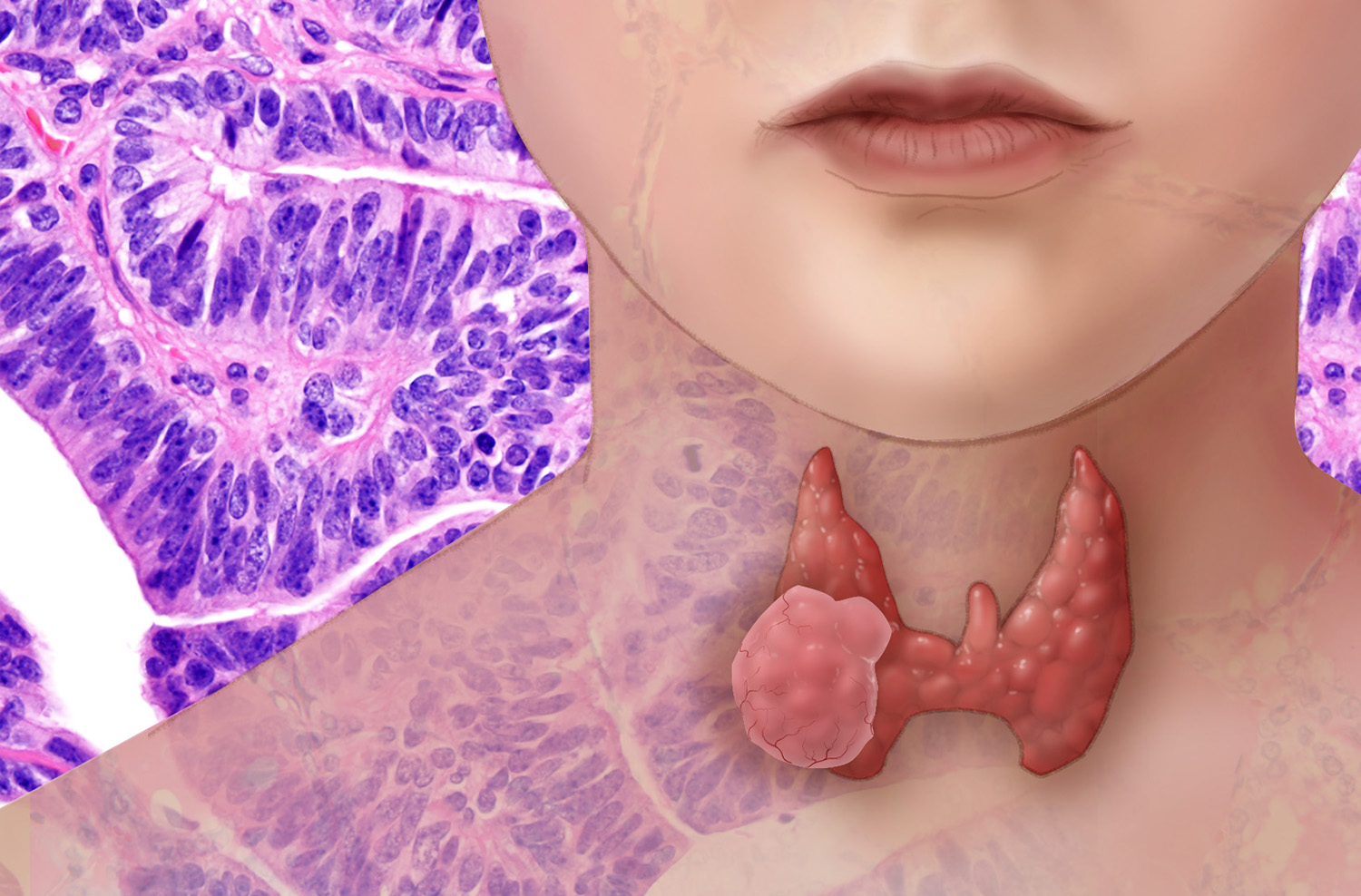
Cancerous.eu – What is Thyroid Cancer? Thyroid cancer is a type of cancer that affects the thyroid gland, a small butterfly-shaped gland located at the base of the neck. The thyroid gland produces hormones that help regulate the body’s metabolism. Thyroid cancer can develop when cells in the thyroid gland grow and multiply abnormally, forming a tumor. There are several types of thyroid cancer, including papillary, follicular, medullary, and anaplastic thyroid cancer. Symptoms of thyroid cancer may include a lump or swelling in the neck, difficulty swallowing or breathing, hoarseness, and enlarged lymph nodes. Treatment for thyroid cancer may include surgery, radiation therapy, and/or chemotherapy, depending on the type and stage of the cancer.
Type of Thyroid Cancer
There are several types of thyroid cancer, including:
- Papillary thyroid cancer: This is the most common type of thyroid cancer, accounting for about 80% of all cases. It develops in the cells that produce thyroid hormones and usually grows slowly.
- Follicular thyroid cancer: This type of thyroid cancer also develops in the cells that produce thyroid hormones. It is less common than papillary thyroid cancer but can be more aggressive.
- Medullary thyroid cancer: This type of thyroid cancer develops in the cells that produce a hormone called calcitonin. It can occur as part of a genetic syndrome or on its own.
- Anaplastic thyroid cancer: This is a rare and aggressive form of thyroid cancer that grows quickly and is difficult to treat.
- Thyroid lymphoma: This type of thyroid cancer develops in the lymphatic tissue of the thyroid gland and is usually a type of non-Hodgkin lymphoma.
- Hurthle cell carcinoma: This is a rare and aggressive type of follicular thyroid cancer that is made up of Hurthle cells.
The type of thyroid cancer is determined by the type of cells involved and the way the cells look under a microscope. Treatment and prognosis can vary depending on the type of thyroid cancer.
Also Read:
Stage of Thyroid Cancer
The stage of thyroid cancer refers to how advanced the cancer is and how far it has spread. The stages of thyroid cancer are typically determined based on factors such as the size and location of the tumor, whether the cancer has spread to nearby lymph nodes, and whether it has spread to other parts of the body. The most commonly used staging system for thyroid cancer is the TNM system, which stands for tumor, node, and metastasis. Here is an overview of the stages of thyroid cancer according to the TNM system:
- Stage I: The tumor is small and confined to the thyroid gland.
- Stage II: The tumor has grown larger and may have spread to nearby lymph nodes.
- Stage III: The tumor has grown into nearby tissues or structures, such as the trachea or esophagus, and may have spread to nearby lymph nodes.
- Stage IV: The cancer has spread to other parts of the body, such as the lungs or bones.
The stage of thyroid cancer can affect treatment options and prognosis, so it is important to have an accurate diagnosis and staging evaluation. Treatment options may include surgery, radiation therapy, chemotherapy, and targeted therapy, depending on the stage and type of thyroid cancer.
Also Read:
What Are the Symptoms of Thyroid Cancer?
In many cases, thyroid cancer does not cause any symptoms in its early stages, and it may be discovered during a routine physical exam or imaging test for an unrelated condition. However, as the cancer grows and spreads, it may cause the following symptoms:
- A lump or swelling in the neck: This is the most common symptom of thyroid cancer. The lump may be painless, but it can also be tender to the touch.
- Changes in voice or hoarseness: Thyroid cancer can affect the nerves that control the voice box, causing hoarseness or difficulty speaking.
- Difficulty swallowing: A large tumor or the spread of cancer to nearby tissues can make it difficult to swallow or feel like something is stuck in the throat.
- Pain in the neck or throat: Advanced thyroid cancer can cause pain or discomfort in the neck or throat.
- Enlarged lymph nodes: Cancer that has spread to nearby lymph nodes can cause them to become enlarged and tender.
- Breathing difficulties: In rare cases, a large thyroid tumor can compress the airways and make it difficult to breathe.
It is important to note that many of these symptoms can also be caused by non-cancerous conditions, such as goiter or thyroid nodules. However, if you experience any of these symptoms, it is important to see a doctor for a proper evaluation and diagnosis.
Also Read:
What Are the Risk Factors for Thyroid Cancer?
The exact cause of thyroid cancer is not known, but there are several factors that can increase the risk of developing the disease. Some of the common risk factors for thyroid cancer include:
- Age: Thyroid cancer can occur at any age, but it is more common in people over the age of 40.
- Gender: Thyroid cancer is more common in women than in men.
- Family history: Having a first-degree relative (parent, sibling, or child) with thyroid cancer increases the risk of developing the disease.
- Radiation exposure: Exposure to radiation, particularly in childhood, increases the risk of developing thyroid cancer.
- Iodine deficiency or excess: A diet that is deficient or excess in iodine can increase the risk of thyroid cancer.
- Personal history of goiter: A goiter is an enlarged thyroid gland, and having a history of goiter increases the risk of developing thyroid cancer.
- Genetic conditions: Certain inherited genetic conditions, such as multiple endocrine neoplasia type 2 (MEN2) and familial medullary thyroid cancer (FMTC), increase the risk of developing thyroid cancer.
It is important to note that having one or more of these risk factors does not necessarily mean that someone will develop thyroid cancer, and many people with thyroid cancer have no known risk factors. However, it is important to be aware of the risk factors and to talk to a doctor about any concerns.
Also Read:
What Can I Do to Reduce My Risk of Thyroid Cancer?
While there is no guaranteed way to prevent thyroid cancer, there are some steps you can take to lower your risk:
- Get enough iodine: Iodine is important for thyroid health, so make sure you get enough through your diet or supplements. However, avoid excessive intake of iodine, as this can also increase the risk of thyroid cancer.
- Avoid radiation exposure: Try to avoid unnecessary exposure to radiation, especially in childhood. If you have a job or hobby that exposes you to radiation, take appropriate safety measures to minimize your exposure.
- Regular medical check-ups: Regular medical check-ups can help detect thyroid cancer at an early stage or help identify any risk factors.
- Family history: If you have a family history of thyroid cancer, talk to your doctor about any extra screening or preventive measures you may need.
- Avoid smoking: Smoking has been linked to an increased risk of thyroid cancer, so it is recommended to avoid smoking and second-hand smoke.
- Healthy diet and exercise: A healthy diet and regular exercise may help lower the risk of many types of cancer, including thyroid cancer.
It is important to note that some of these risk factors are not within your control, such as family history or exposure to radiation in childhood. However, making healthy lifestyle choices can help reduce your overall risk of developing thyroid cancer.
Also Read:
How Is Thyroid Cancer Diagnosed?
Thyroid cancer is usually diagnosed through a combination of tests, including:
- Physical examination: The doctor will examine the neck for any lumps or swelling in the thyroid gland.
- Blood tests: Blood tests may be done to check the levels of thyroid hormones and other indicators of thyroid function.
- Imaging tests: Ultrasound, CT scans, MRI, or PET scans may be used to produce detailed images of the thyroid gland and surrounding tissues to help determine the extent of the cancer.
- Biopsy: A small sample of tissue from the thyroid gland is removed and examined under a microscope to determine if it is cancerous. The biopsy may be done using a fine needle aspiration (FNA) biopsy, which involves using a thin needle to remove cells from the thyroid gland.
Once the diagnosis of thyroid cancer is confirmed, further tests may be done to determine the stage of the cancer, which can help guide treatment decisions. These may include additional imaging tests or surgery to remove lymph nodes and/or the thyroid gland itself.
It is important to note that thyroid nodules (lumps in the thyroid gland) are common and are often benign. However, if you have a thyroid nodule, it is important to get it evaluated by a healthcare professional to determine if further testing or treatment is needed.
Also Read:
How Is Thyroid Cancer Treated?
The treatment of thyroid cancer depends on several factors, including the type and stage of cancer, the patient’s age and overall health, and personal preferences. The treatment options for thyroid cancer may include:
- Surgery: Surgery is the most common treatment for thyroid cancer. The surgical options may include removing part of the thyroid gland (lobectomy) or the entire gland (total thyroidectomy), depending on the extent and location of the cancer. In some cases, the surgeon may also remove nearby lymph nodes to help prevent the cancer from spreading.
- Radioactive iodine therapy: After surgery, radioactive iodine may be given to destroy any remaining thyroid cancer cells. The thyroid gland absorbs iodine, so the radioactive iodine can target any remaining cancer cells in the thyroid gland or nearby tissues.
- External radiation therapy: External radiation therapy involves using high-energy X-rays or other forms of radiation to kill cancer cells.
- Chemotherapy: Chemotherapy involves using drugs to kill cancer cells. Chemotherapy is not typically used to treat thyroid cancer, but it may be used in more advanced cases or if other treatments are not effective.
- Targeted therapy: Targeted therapy is a newer type of cancer treatment that targets specific molecules or pathways involved in the growth of cancer cells. Targeted therapy is not commonly used for thyroid cancer, but it may be used in certain cases.
- Hormone therapy: After surgery, patients may need to take hormone replacement therapy to replace the thyroid hormone that the thyroid gland normally produces. This can help prevent the cancer from coming back.
The treatment of thyroid cancer often involves a combination of these approaches. Your healthcare team will work with you to develop a personalized treatment plan based on your individual situation.